A Catalyst Health book/Foreword by Tony Robbins

BY KYLE ZAGRODZKY & DR. JIMMY YOUNGBLOOD

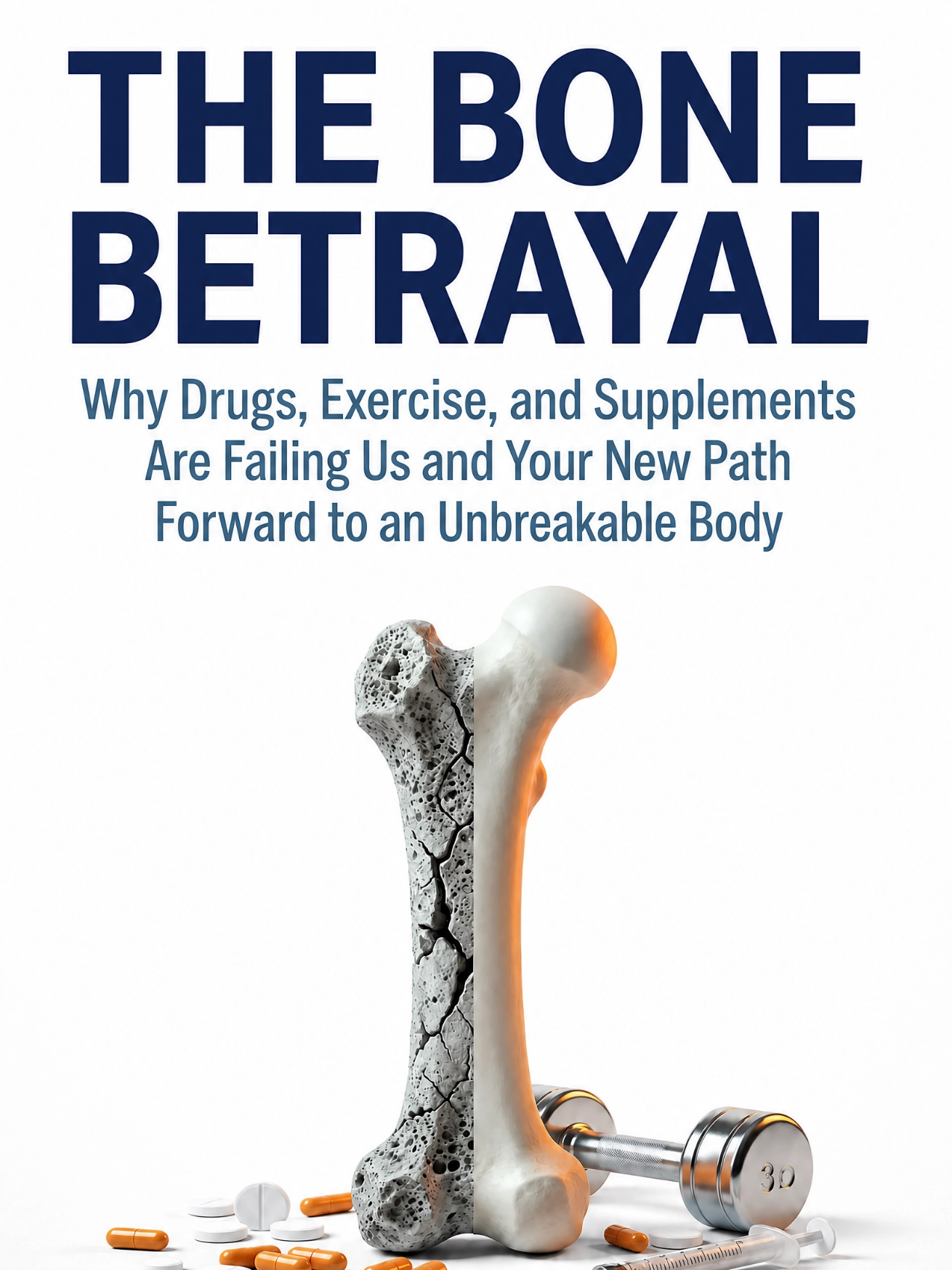
The Bone
Betrayal

Why Drugs, Exercise, and Supplements Are Failing Us and Your New Path Forward to an Unbreakable Body

We learned to measure bone.
Did we forget what makes it alive?

A fracture is not where this story begins. It begins in childhood, in the force modern life removes, in the biology a scan cannot show—and in a health system that often notices the skeleton only after it fails.

One book. Seventeen chapters. A different way to see the foundation of your health.

The Bone Betrayal, by Kyle Zagrodzky and Dr. Jimmy Youngblood. Original manuscript cover: Why Drugs, Exercise, and Supplements Are Failing Us and Your New Path Forward to an Unbreakable Body.
A CATALYST HEALTH BOOK
CHILDHOOD TO LONGEVITYTHE SCIENCE BEHIND THE SKELETON

FOREWORD BY TONY ROBBINS

“That’s why
this book matters.”

Tony Robbins has known Kyle and Jimmy for more than a decade. In his foreword, he describes his own experience with skeletal strength conditioning and why the skeleton belongs at the center of the healthspan conversation.

“What you're holding is not a wellness pitch. It is not testimonials dressed up as science. It is a careful, rigorous, deeply researched account of a problem that is unfolding right now”
Tony RobbinsExcerpt from the foreword

“Not just how long you live — how well you live.”

01THE BETRAYAL

A HEALTH CRISIS WE HAVE LEARNED NOT TO SEE

A life can get smaller
before a bone breaks.

The first loss may be confidence. Then movement. Then the freedom to do ordinary things without asking whether a fall will change everything.

The Bone Betrayal begins with that human cost, then follows it backward: to the skeleton a child was given the opportunity to build, to the environment that body has lived in, and to a medical model that can mistake one useful measurement for the whole organ.

The authors’ argument is larger than osteoporosis. Modern life can remove the mechanical demands that help shape a capable skeleton. Research divides bone among specialties. Care often arrives after a fracture. Together, those patterns create a problem that reaches into families, healthcare systems, physical readiness, and the way a society ages.

Put forward by Catalyst Health, this book is intended to be the most complete and comprehensive work on the science of bone and the societal issues created by our current approach to skeletal health. It assembles a cross-disciplinary body of research into a single, challenging narrative: from the scale of fragility to the living biology beneath it, and from conventional interventions to the science of adaptation.

“We have been treating the leaves. This book is about the soil.”

Dr. Jimmy Youngblood · Preface
02THE THREE PILLARS

THE ROUTINE IS FAMILIAR. THE QUESTIONS ARE NOT.

A prescription.
A supplement.
A gym membership.

Each can have value. But what does each actually do for a living skeleton—and where does the promise outrun the evidence or the delivery?

01

Keeping mineral is not the same question as renewing tissue.

The pharmaceutical chapter examines bisphosphonates through fracture benefits, turnover, material properties, long-term tradeoffs, and rare harms. It asks readers to distinguish slowing loss from building new tissue, and a favorable density change from a full account of bone’s capacity to repair itself.

02

Having the ingredients is not the whole construction plan.

The supplement chapter moves beyond ‘take calcium’ to nutrient forms, interdependence, labeling, and what studies actually measured. The authors challenge the leap from a modest density result to a sweeping promise—and examine the matrix, not only the mineral, of bone.

03

A sound principle can still be delivered badly.

The fitness chapter follows a 68-year-old woman into an ordinary gym to make adherence, cost, equipment, and physical barriers concrete. The authors defend mechanical loading as a principle while questioning whether the conventional model makes the needed stimulus accessible to the people who need it most.

03OPEN THE BOOK

A FEW QUESTIONS THAT MAY CHANGE YOURS

The skeleton
changes the story.

Density is only one doorway. Step through it and the book opens into architecture, hormones, immunity, the gut, the brain, biological rhythms, and the forces that tell bone to adapt.

CHAPTERS 02 & 04 · THE GENERATIONAL QUESTION

What if the crisis begins in the skeleton we never built?

The book connects childhood movement, peak bone mass, and the stress fractures recorded in military training. It asks whether tomorrow’s fragility is being shaped long before anyone receives a diagnosis.

Explore the construction years
CHAPTER 11 · BEYOND THE NUMBER

Two people. One T-score. Two different structures.

Internal plates can become rods. Cortical bone can become porous. Collagen can change. A familiar scan cannot tell that entire story. The book asks what we miss when mineral quantity becomes the verdict.

Look beneath the score
CHAPTER 03 · THE ELEPHANT IN THE LABORATORY

Why aren’t bone and fertility in the same conversation?

Follow a bone-derived hormone into research on testosterone—and into a real dispute between experimental models. The book uses that unresolved question to challenge the walls between scientific fields.

Enter the research gap
CHAPTERS 07, 13 & 14 · THE LIVING NETWORK

Your gut. Your memory. Your sleep. Your bones?

Microbial metabolites, osteocalcin, and cellular clocks make the skeleton part of conversations usually held elsewhere. These chapters explore mechanisms, human observations, and the next questions that deserve testing.

Follow the bone–brain question
CHAPTER 15 · THE SCIENCE OF OSTEOGENIC LOADING

What if more exercise isn’t the more precise question?

The authors examine force, brief loading, saturation, safety, and skeletal site. What challenges the spine may not challenge the hip. Duration alone cannot describe the signal a particular bone receives.

Understand the loading argument
CHAPTER 17 · BONE AS A LONGEVITY ORGAN

How complete is a longevity plan that leaves out the skeleton?

The final chapter connects fracture cascades, muscle, marrow, and independent years. It challenges a healthspan conversation that measures so much while overlooking the structure everyday capability depends on.

See the missing foundation
A PASSAGE FROM CHAPTER 01
“In the simplest terms: osteoporosis does not just weaken bones. It weakens lives. The fear of breaking becomes a prison that shrinks your world long before a fracture ever occurs.”
The Personal Cost: A Life Diminished
A PASSAGE FROM CHAPTER 15
“A loading protocol that generates sufficient force to stimulate the lumbar spine may be entirely insufficient for the proximal femur. A protocol adequate for the femur may be inadequate for the pelvis.”
Not All Bone Is Created Equal: The Architecture of Adaptation
04ALL SEVENTEEN CHAPTERS

THE FULL ARGUMENT, NOT A COLLECTION OF TIPS

From the first alarm
to the wider horizon.

The book moves from the societal cost of fragility to developmental and environmental conditions, systemic biology, conventional interventions, the language of force, and the case for skeletal health across a lifetime. Open any chapter to explore its question.

PART 01

The crisis

01A Crisis Hidden in Plain SightWhat does fragility take from a life before the first fracture?

A wrist fracture can be dismissed as bad luck. A vertebral fracture can go unnoticed. A hip fracture can rearrange an entire household. The opening chapter follows the human cost of skeletal fragility through fear of falling, shrinking activity, lost confidence, recovery, caregiving, and the threat to independence. It also puts the growing absolute burden of fractures in its demographic context: aging populations can create more fractures even when age-standardized rates improve. The important question is not simply how many bones break. It is how many lives become smaller before and after they do—and how often an early warning fails to trigger a fuller conversation about the skeleton.

Keep me in the loop
02The Architecture of a Crisis: How We Built a Fragile WorldWhat can military training reveal about the childhoods that came before it?

Basic training becomes an unexpected window into civilian life. Large groups of young adults face demanding, standardized physical work, and their injuries are recorded. The authors connect that evidence with childhood bone-mass indicators, adult bone-density trends, and the force that sedentary life increasingly removes. Their argument is that skeletal fragility has a history: the reserve a person brings into adulthood affects the decades that follow. The chapter moves from individual biology to readiness, healthcare costs, and a society’s capacity to remain physically capable. It challenges the idea that an aging person’s fracture begins only in old age—and asks what modern childhood may already have built, or failed to build.

Keep me in the loop
PART 02

The overlooked conditions

03The Elephant in the LaboratoryWhy have bone and fertility been studied so extensively—and so rarely together?

The skeleton sits inside everyone’s specialty and fully inside no one’s. This chapter uses that fragmentation to explore one of the book’s most provocative questions: whether bone-derived signals belong in the conversation about reproductive health. It follows the original mouse research linking osteocalcin, a hormone produced by bone, with a receptor involved in testosterone production. It also confronts later mouse studies that did not reproduce key findings. The dispute is part of the story, not edited out of it. For women, the chapter examines the shared effects of low energy availability on reproduction and bone formation. Its challenge is to researchers: what could become visible if these fields asked their questions together?

Keep me in the loop
04The Skeleton They Never Built: Peak Bone Mass and the Generational Bone CrisisWhat kind of skeletal reserve are we helping children build?

The construction years matter. Through tennis players’ arms, gymnasts, former baseball players, and school-based jumping programs, this chapter examines how activity during growth can shape bone architecture as well as mineral content. It makes the peak-bone-mass window a responsibility shared by families, schools, communities, and public policy. Safe places to play, vigorous movement, nutrition, and the opportunity to participate are not equally available. The authors also examine a counterintuitive problem: fewer childhood fractures can reflect less exposure to active play rather than a healthier skeletal foundation. The question is not how to blame a child for moving too little. It is how to build an environment that gives the developing skeleton a chance.

Keep me in the loop
05The Invisible Threat: Environmental Toxins, Endocrine Disruptors, and the Modern SkeletonCould the skeleton also carry the history of our environment?

Bone can be a reservoir as well as a structure. The authors examine lead stored in the skeleton, PFAS, cadmium, endocrine-disrupting chemicals, air pollution, and emerging work on microplastics in skeletal tissue. Exposure timing, life stage, and unequal environmental burdens complicate a story that cannot be reduced to personal diet and exercise. The chapter also follows an evidence problem: a study can answer its chosen question accurately and still be used to imply more than it tested. Its scrutiny of a three-year medication trial asks what longer-term reassurance would actually require. Environmental bone research is still developing, but the book makes a clear case that the chemical world belongs in the skeletal-health conversation.

Keep me in the loop
PART 03

The whole-body consequences

06The Age Acceleration CrisisWhat might declining skeletal reserve signal about the rest of the body?

The calendar tells only one story. This chapter introduces an illustrative comparison of skeletal reserve, then moves through reproductive hormones, immunity, the bone–muscle partnership, the brain, metabolism, and the gut. Its most striking example is the diabetes–bone paradox: a person can have relatively high bone density while other aspects of bone quality remain compromised. The authors use these connections to ask whether skeletal decline is more than an isolated fracture problem. Their ‘Skeletal Biological Age’ illustration is a way of thinking about reserve, not a clinical age test. The larger challenge is to stop treating bone, muscle, metabolism, and cognition as disconnected conversations when the body itself does not recognize those boundaries.

Keep me in the loop
07The Gut-Bone Axis: Microbiome, Immunity, and Skeletal IntegrityWhat if some of bone’s instructions begin in the gut?

The intestine does more than absorb calcium. Its microbial ecology can influence immune signals, inflammatory pathways, and metabolites that researchers are investigating in skeletal renewal. The chapter follows fiber fermentation, short-chain fatty acids, and the balance between signals that favor bone formation and those that favor resorption. Animal experiments offer striking mechanisms; human probiotic trials offer a more complicated picture, including a longer trial with no confirmed benefit. That complexity makes the question more interesting, not less. The authors examine why the recipient’s biology may matter as much as the name of an intervention. Bone health begins to look like a whole-organism problem, with the intestinal environment among the places worth looking upstream.

Keep me in the loop
08The Cellular Battleground: Senescence, Inflammation, and the Aging SkeletonWhat happens when the cells that should maintain bone start disrupting renewal?

Some osteocytes live for decades. What happens when those long-lived cells accumulate damage and begin sending inflammatory signals into the tissue around them? The chapter investigates cellular senescence, the bone-marrow environment, and a network that can become less responsive to the demands placed on it. Diabetes, glucocorticoids, aging, and cancer treatments reveal different routes to skeletal vulnerability. The emerging senolytic research is examined with its limits intact: strong findings in aged mice are not the same thing as restored human bone, and a small human trial did not show an overall density benefit. The underlying question is fundamental: protecting the skeleton may require understanding its capacity to renew, not just counting the mineral left inside it.

Keep me in the loop
PART 04

Renewal, interventions and measurement

09The Process of Bone RemodelingWhy must bone be taken apart before it can be renewed?

A traveling cellular team must select a site, remove old tissue, clean the surface, recruit builders, lay down collagen-rich matrix, and mineralize it. The chapter follows that coordinated process through activation, resorption, reversal, formation, and quiescence. It reveals why the handoff between cells matters, why the architecture of a thin trabecula can be lost, and why a density increase can reflect additional mineralization of existing tissue rather than an equivalent amount of new matrix. Bone is presented as a composite of collagen, mineral, water, living cells, and organized structure. Understanding its renewal gives readers a sharper question for every proposed solution: what is being preserved, what is being rebuilt, and how do we know?

Keep me in the loop
10The Three Pillars: A Critical ExaminationA prescription, a supplement and a gym membership—what does each actually deliver?

This is the book’s extended examination of the conventional bone-health model. The authors investigate bisphosphonates, the supplement industry, and the fitness system through outcomes, remodeling, nutrient forms, adherence, access, and risk. They distinguish slowing bone loss from constructing new tissue, a small density change from a meaningful outcome, and sound exercise biology from a delivery model that may exclude the people most in need of it. A 68-year-old woman negotiating an ordinary gym makes those barriers tangible. The critique does not erase genuine benefits; it asks where those benefits end and what the current framework misses. The chapter’s alternative question is not ‘Which industry wins?’ It is ‘What does a living skeleton actually need?’

Keep me in the loop
11Beyond the Number: Bone Quality, Microarchitecture, and Why DXA Alone Is Not EnoughCan two identical T-scores hide two very different skeletons?

A density score is useful, but it is not a complete picture of mechanical strength. The authors look beneath it to trabecular plates and rods, cortical pores, collagen quality, mineralization, bone water, geometry, and accumulated damage. The image of broad internal plates becoming fragile rods makes the architecture problem immediately understandable. The diabetes example shows why more mineral does not automatically settle the question of fragility. The chapter then explores tools that attempt to add context, from trabecular bone score to turnover markers and advanced imaging. It does not ask readers to abandon DXA. It asks them to treat the result as an entry point into a fuller conversation about the structure they live in.

Keep me in the loop
PART 05

The signals bone responds to

12The Language of Bone: How Your Skeleton Listens and AdaptsWhy can plenty of movement still miss the signal bone recognizes?

From astronauts to tennis players, the effects of loading become a way to understand how the skeleton listens. Embedded osteocytes sense mechanical conditions, fluid moves through their microscopic channels, and signals such as sclerostin help govern the response. The chapter follows the path from physical force to cellular instructions, then examines research distinguishing higher-impact activity from lower-impact movement. Magnitude matters, but so do the person, the skeletal site, and the practical risks of generating force. The question becomes more precise than ‘Are you exercising?’ The authors ask what the skeleton is being told by that exercise. An author’s note on osteocalcin and acute stress extends the story beyond structure into bone’s role as a signaling organ.

Keep me in the loop
13The Bone-Brain Axis: How Your Skeleton Governs Cognition, Memory, and Mental HealthWhat might a hormone made by bone be doing in the brain?

The book follows osteocalcin from bone-forming cells into research on memory, mood, neurotransmitters, and the stress response. Mouse experiments map a pathway involving a hippocampal receptor and BDNF, a protein important in neuronal function. Human studies discussed in the chapter connect bone loss with later cognitive outcomes, raising questions that still need direct clinical testing. The authors propose a possible feedback loop between less loading, less formation, reduced signaling, and diminishing activity. It is not presented here as a proven dementia-prevention program. It is a reason to widen the investigation: the skeleton may participate in the biology of the mind, rather than merely carry the brain from place to place.

Keep me in the loop
14The Circadian Skeleton: Time, Rhythm, and Bone RemodelingDoes your skeleton keep a timetable of its own?

Bone turnover has a daily rhythm. Resorption markers rise overnight and early in the morning, while formation markers follow a different pattern. Even the time a blood sample is collected can change how a result is interpreted. The chapter moves from clock genes in bone cells to shift work, short sleep, light exposure, meals, stress, and the social schedules surrounding adolescence. Some pathways are established; others are research questions. The practical intellectual shift is clear: remodeling is not only about what happens, but when. A discussion of timing makes modern life part of the investigation and gives readers another way to see the skeleton as a living system operating within the rhythms of the whole body.

Keep me in the loop
15The Science of Osteogenic LoadingWhat if the right force matters more than another hour of activity?

Wolff’s Law, Frost’s mechanostat, and experimental loading research bring the book’s mechanical argument into focus. The authors examine force magnitude, brief loading bouts, response saturation, and differences between skeletal sites. A force adequate for the spine may not be adequate for the hip or pelvis. The evidence discussion includes supervised high-intensity trials and device-based case-series research, rather than treating every protocol as interchangeable. The chapter also exposes the pelvic gap: a consequential skeletal region has rarely been the primary outcome in the studies discussed. Its central dilemma is practical and scientific. How can sufficient local loading be delivered to a person with fragile bone in a controlled way, and which outcomes have actually been measured?

Keep me in the loop
PART 06

A lifetime of skeletal health

16The Skeleton Does Not DiscriminateWho disappears when skeletal care is treated as a problem for only one population?

Children building peak bone mass, young athletes, adults in midlife, men, postmenopausal women, and older people enter the same story from different doors. The authors examine the populations that narrow screening patterns and fragmented care can miss. A single Olympic-weightlifter case challenges the assumption that familiar training tells us everything about skeletal response, while adolescent and female-athlete examples raise different questions about development and vulnerability. The chapter argues for informed self-advocacy and a more coherent home for skeletal health within medicine. It is not a claim that every person needs the same intervention. It is a challenge to a system that too often makes bone visible only after a threshold, a diagnosis, or a fracture.

Keep me in the loop
17Bone as a Longevity OrganWhat is a longevity plan worth if it overlooks the ability to live independently?

The closing chapter moves the skeleton into the center of healthspan. It follows fracture cascades, the fear–inactivity cycle, marrow biology, the bone–muscle partnership, metabolic connections, and associations with mortality. The authors ask why longevity culture can track glucose, sleep, cardiovascular fitness, and cognition while neglecting the organ that supports everyday capability. Bone is presented as a mechanical, endocrine, and marrow system whose decline belongs in a broader account of aging. The argument is not that improving a scan guarantees a longer life. It is that independence, resilience, and the quality of later years are incomplete conversations without the skeleton. The book ends by asking readers to reconsider the foundation on which those years depend.

Keep me in the loop

Find the question you didn’t know to ask.
Then read the evidence behind it.

Keep me in the loop
05A BOOK FOR A MUCH WIDER CONVERSATION

YOU DON’T NEED A DIAGNOSIS TO NEED THIS STORY

For anyone with
a body and a future.

For the parent thinking about a child’s foundation. The athlete asking what training misses. The adult planning the next decades. The family whose life changed after a fall.

For people with osteopenia or osteoporosis, and people who have never thought seriously about their bones. For men and women, younger adults and older adults. For caregivers, coaches, educators, students, clinicians, researchers, public-health leaders, entrepreneurs, and health-system decision-makers who want a fuller picture.

The book’s invitation is not limited to a risk category. It is to anyone unwilling to accept that declining capability is simply the price of getting older—or that fragmented knowledge is the best way to understand an integrated body.

06THE AUTHORS

DECADES OF BUILDING. YEARS OF ASKING BETTER QUESTIONS.

Kyle & Jimmy.

Two complementary perspectives: the entrepreneur who helped bring skeletal strength conditioning into public view, and the research-driven leader determined to understand the biology beneath it.

01ENTREPRENEUR · FOUNDER · CO-AUTHOR
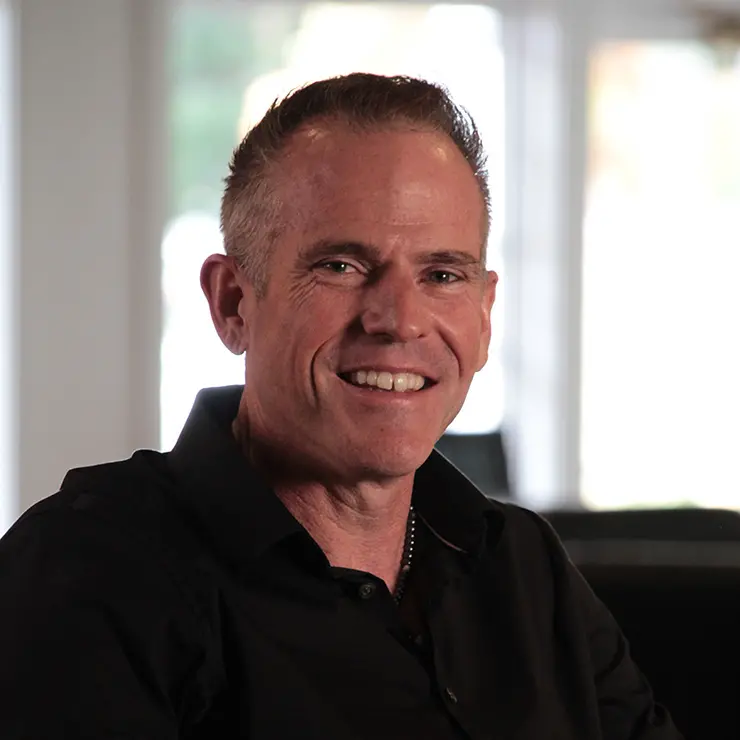
Kyle Zagrodzky

Kyle
Zagrodzky

Founder & CEO, OsteoStrong

Kyle Zagrodzky describes himself first as an artist: not one who paints or sculpts, but one driven to create things that leave people better than he found them. His entrepreneurial career began at eighteen and has crossed software, fitness, education, and international business.

In his preface, Kyle recounts owning nine fitness centers with his wife, training thousands of health-club owners, and helping build a global software company. He describes businesses that generated hundreds of millions of dollars, employed thousands, and touched lives in more than twenty countries. Those experiences prepared him for the endeavor he calls the most difficult and rewarding of his career: bringing skeletal strength conditioning into the mainstream.

That journey began in 2011. It meant introducing a solution to a problem many people did not know they had, around a system they rarely considered. Tony Robbins later became an investor and advisor; in 2017, Kyle began speaking to audiences around the world on skeletal strength and adaptation.

The manuscript reports more than 25 million OsteoStrong sessions across centers in fourteen countries at the time of writing. Kyle’s contribution to this book is the perspective of a long-term builder: translating overlooked science into an accessible conversation about capability, independence, and the way people age. His stated goal is not to create adversaries, but to elevate that conversation.

02DOCTORAL RESEARCH · LEADERSHIP · CO-AUTHOR
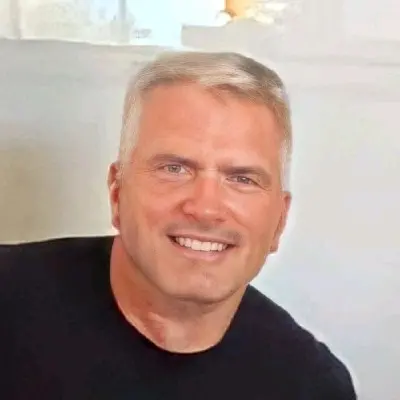
Dr. Jimmy Youngblood

Dr. Jimmy
Youngblood

President, OsteoStrong

Dr. Jimmy Youngblood combines doctoral research with more than two decades of experience in global marketing, high-tech software development, strategic consulting, finance, and international team leadership. OsteoStrong’s public press materials credit the teams he led before joining its expansion with creating more than half a billion dollars of direct value through technology, products, and services.

His skeletal-health journey became personal when a close friend was diagnosed with osteoporosis in her thirties. In 2016, that effort to understand and help brought him into the work alongside Kyle. It developed into years of professional commitment and doctoral scholarship, undertaken while continuing to lead in the business.

Jimmy’s preface gives the book its central question: why has the growing knowledge of bone biology not changed the way society understands the skeleton? Raised on a farm, he uses the distinction between feeding a plant and building healthy soil to explain his approach. The point is to understand the conditions and signals that allow a living system to function, rather than focus only on the visible symptom.

The authors describe a combined twenty-five years of research and effort into the skeletal system. Jimmy brings that sustained engagement with the literature into a detailed account of remodeling, measurement, endocrine pathways, the three conventional pillars, and mechanical adaptation. His preface also acknowledges the colleagues and thousands of people whose pursuit of better health helped make this inquiry a human one, not merely an academic exercise.

Biographies draw on the authors’ prefaces and public company materials. Career and operational figures are author- or company-reported.

MORE THAN A CENTURY OF RESEARCH, BROUGHT INTO ONE CONVERSATION

The references
are an invitation.

The authors describe more than 400 cited papers, representing over 400,000 citations across that research, and twenty-five combined years of work on the skeletal system. The bibliography brings foundational mechanics, contemporary biology, clinical studies, and relevant government data into the same frame.

The book does not hide the difficult parts: replication disputes, null findings, differences between animal mechanisms and human outcomes, and the gap between a result and the headline built around it. The point is not to ask readers to accept a slogan. It is to give them a coherent argument and the source trail to investigate it.

“The works cited section at the end of this book is not a formality. It is an invitation.”
Dr. Jimmy Youngblood · A Note on the Science
07THE NEXT CHAPTER

BE THERE WHEN THE BOOK IS READY

Reserve your place
on the launch list.

If the book has raised a question you want answered, don’t let it end at this page.

Register your interest for official launch, reservation, and availability updates from Catalyst Health. No charge. No checkout. No commitment to buy.

BEFORE YOU TURN THE PAGE

A few
quick answers.

Is this only a book about osteoporosis?

No. Osteoporosis and fractures establish the stakes, but the book goes much further: childhood development, environmental exposures, endocrine biology, remodeling, measurement, the gut, the brain, circadian rhythm, mechanical loading, lifelong capability, and longevity.

Does it argue that every conventional intervention is useless?

No. The Three Pillars chapter acknowledges genuine benefits while examining their limits, tradeoffs, evidence, and delivery. Its central challenge is to an incomplete model of a living organ—not to the value of every medicine, nutrient, or form of exercise.

Can I purchase or preorder now?

A sales destination and publication details have not yet been confirmed. You can register book-launch interest here now. That signup is stored, but it does not place an order or reserve a guaranteed copy.